How I Found Calm Through Yoga and TCM-Inspired Daily Habits
For years, I chased quick fixes for stress and low energy—until I discovered the quiet power of combining yoga meditation with traditional Chinese medicine (TCM) principles. It wasn’t magic, but a gradual shift in daily habits that changed everything. This isn’t about perfection; it’s about consistency, awareness, and listening to your body. What I learned reshaped not just my mornings, but my mindset. Let me walk you through how small, intentional choices can quietly transform your well-being from the inside out.
The Breaking Point: When Stress Won (and How I Fought Back)
There was a time when I thought I had it all under control. My days were filled with salads, gym sessions, and planner entries color-coded by priority. Yet, despite appearances, I was running on fumes. Chronic fatigue clung to me like a second skin. I’d wake up exhausted, rely on coffee by mid-morning, and feel emotionally raw by 3 p.m. Minor setbacks would trigger disproportionate frustration, and I noticed I was snapping at my children over small things—something I deeply regretted later. Sleep was restless, and my thoughts raced even when my body was still.
The turning point came during a routine doctor’s visit. Blood work showed nothing alarming, yet I knew something was wrong. My body was sending signals, but I hadn’t learned how to listen. That’s when a friend gently suggested I look beyond Western medicine’s symptom-focused model and explore traditional Chinese medicine. At first, I was skeptical. I associated TCM with ancient philosophies too abstract for modern life. But desperation led me to an experienced TCM practitioner who explained that my fatigue, irritability, and poor sleep weren’t isolated issues—they pointed to an imbalance in Qi, the vital energy that flows through the body’s meridians.
In TCM, health is not merely the absence of disease but the harmonious flow of energy across organ systems. Each organ is linked not only to physical functions but also to emotions and seasons. For example, the liver is associated with anger and the spring season, while the spleen governs digestion and overthinking. My symptoms—fatigue, irritability, and digestive discomfort—suggested a stagnation of liver Qi and a deficiency in spleen energy, likely due to chronic stress and overwork. This was not a diagnosis of failure, but an invitation to understand my body more deeply.
My first step was simple: pause. I began with five minutes of stillness each morning, sitting quietly with my eyes closed, focusing on my breath. It felt awkward at first—my mind wandered constantly—but gradually, I became more aware of tension in my shoulders, the tightness in my jaw, and the subtle shifts in my energy throughout the day. This growing body awareness became the foundation for everything that followed. It wasn’t about fixing myself overnight, but about reconnecting with the rhythms I had ignored for years.
Bridging Two Worlds: Yoga Meets Traditional Chinese Medicine
As I delved deeper into TCM, I began to see surprising parallels with the yoga I had practiced intermittently for years. While yoga originated in India and TCM in China, both systems share a profound respect for the body’s energetic architecture. Yoga speaks of prana, the life force; TCM calls it Qi. Both traditions emphasize that health depends on the free flow of this energy. When energy becomes blocked or imbalanced, discomfort arises—whether physical, emotional, or mental.
Yoga meditation, particularly breath-centered practices, supports the movement of Qi through the meridians. For instance, deep diaphragmatic breathing activates the parasympathetic nervous system, which calms the body and enhances circulation—mirroring TCM’s goal of restoring balance between yin and yang. Certain yoga postures gently stretch and compress areas of the body where major meridians run. Forward bends, for example, influence the kidney and bladder meridians, which TCM associates with fear, vitality, and water metabolism. Twists stimulate the liver and gallbladder meridians, helping to release stored tension and support detoxification.
What makes the combination so powerful is its comprehensiveness. Yoga offers tangible tools—postures, breathwork, meditation—that help regulate the nervous system and increase body awareness. TCM provides a diagnostic framework that helps interpret what the body is communicating. Together, they create a feedback loop: yoga practice reveals imbalances, and TCM wisdom guides how to respond. For example, if I notice irritability and tightness in my ribcage, I recognize it as liver Qi stagnation. Instead of reaching for a sedative tea or pushing through, I turn to specific yoga poses like Seated Twist or Cat-Cow, which are known to ease liver tension.
Moreover, both systems prioritize prevention. Unlike reactive models that wait for illness to appear, yoga and TCM encourage daily practices that maintain balance before problems escalate. This shift—from crisis management to consistent care—was revolutionary for me. I no longer waited to feel broken before taking action. Instead, I learned to nurture my energy daily, like tending a garden rather than waiting for it to wither before watering.
Morning Rituals That Stick: A TCM-Yoga Hybrid Start
One of the most transformative changes I made was redesigning my mornings. I used to wake up to a blaring alarm, immediately check my phone, and rush into the day feeling behind before I even got out of bed. Now, I rise with the light, usually just after sunrise, aligning with TCM’s belief that the body’s energy naturally begins to stir at this time. The first thing I do is a quick self-check: I look at my tongue in the mirror. A pale tongue may suggest Qi deficiency, while a thick white coating could indicate dampness or digestive sluggishness. This simple act grounds me and sets the tone for mindful choices.
Next, I drink a cup of warm water, sometimes with a slice of lemon or a small piece of ginger. In TCM, cold water is believed to shock the digestive system, especially in the morning when the stomach’s yang energy is just waking up. Warm water gently awakens the spleen and stomach, supporting digestion and Qi flow. As I sip, I sit quietly for a few moments, allowing my body to transition from rest to activity. This small pause is not passive—it’s an act of intention.
After hydrating, I move to my yoga mat for five to ten minutes of gentle stretching. I begin with Cat-Cow to loosen the spine and awaken the flow of Qi along the Governing and Conception meridians. Then, I move into Child’s Pose, a restful forward bend that calms the nervous system and gently compresses the abdomen, supporting spleen and stomach function. I pair each movement with slow, deep breaths, inhaling through the nose and exhaling fully, directing my awareness to the lower dantian, about two inches below the navel. In both yoga and TCM, this area is considered the body’s energy center, a reservoir of Qi.
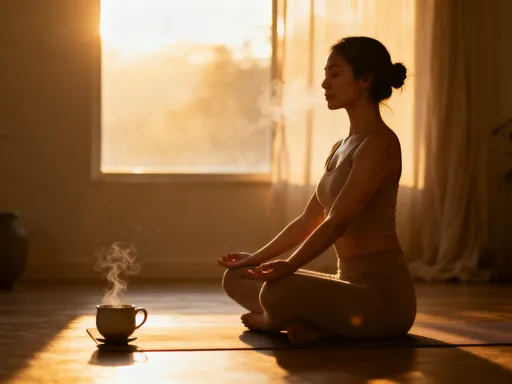
I follow this with a 10-minute seated meditation. I sit cross-legged on a cushion, spine tall but relaxed, hands resting on my knees. My focus is on the breath and the sensation of warmth in the lower abdomen. Sometimes, I visualize a soft golden light glowing in my dantian, expanding with each inhale. This practice strengthens my energetic foundation and sets a calm, centered tone for the day. The key to making this routine sustainable has been consistency over intensity. I don’t aim for perfection—if I only have five minutes, I take five minutes. What matters is showing up, day after day, building a rhythm that feels nourishing rather than burdensome.
Breath as Medicine: Simple Techniques You Can Do Anywhere
If there’s one tool that has transformed my life more than any other, it’s conscious breathing. The breath is unique—it’s both automatic and voluntary, a bridge between the conscious and unconscious mind. In moments of stress, our breathing becomes shallow and rapid, signaling danger to the brain and triggering the fight-or-flight response. By consciously slowing and deepening the breath, we send a message of safety, calming the nervous system within minutes.
From a TCM perspective, breath is the primary means of gathering Qi from the air. The lungs govern Qi and are closely linked to the emotion of grief. When we breathe poorly, we weaken our Qi and become more vulnerable to emotional imbalance. Diaphragmatic breathing—also called belly breathing—engages the full capacity of the lungs and massages the internal organs, promoting circulation and detoxification. It’s a simple yet profound way to support both physical and emotional health.
Two techniques have become my daily allies. The first is 4-6 breathing: inhale for a count of four, exhale for a count of six. The extended exhale activates the vagus nerve, enhancing relaxation. I use this during work breaks, before answering difficult emails, or when I feel tension rising. It takes less than a minute and resets my entire system. The second is the “inner smile” meditation, a practice from Taoist tradition. I close my eyes, take a few deep breaths, and imagine a warm, gentle smile spreading from my heart to different parts of my body—the liver, the stomach, the kidneys. This visualization cultivates self-compassion and directs healing Qi to areas that need it.
What I’ve learned is that breathwork doesn’t require special conditions. I can do it while waiting in line, sitting in traffic, or lying in bed. The more I practice, the more intuitive it becomes. My body now recognizes the signal of deep breathing and responds by softening. Over time, these micro-moments of regulation accumulate, creating a baseline of calm that makes daily challenges easier to navigate. Breath, I’ve realized, is not just a function—it’s a daily act of self-care that costs nothing and gives everything.
Moving Energy: Yoga Sequences for Balance, Not Burnout
In the past, I equated exercise with intensity. I believed that unless I was drenched in sweat and sore the next day, I hadn’t done enough. But this mindset only deepened my fatigue. High-intensity workouts, while beneficial for some, can deplete Qi when the body is already low on reserves. TCM teaches that excessive physical exertion consumes Qi and can damage the spleen and kidneys, the organs responsible for energy production and storage. I needed movement that replenished, not drained.
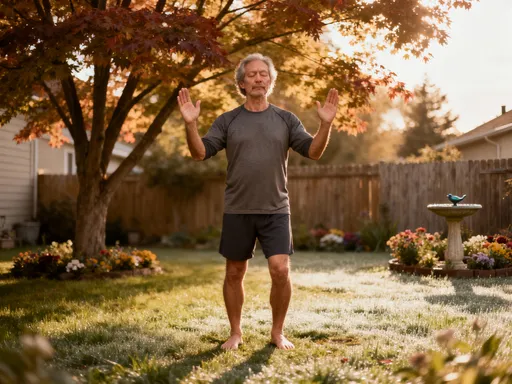
That’s when I embraced a gentler form of yoga—slow, intentional, and deeply mindful. My daily 15-minute sequence is designed to support key meridians and promote energetic balance. I begin with standing Mountain Pose, grounding through my feet and aligning my posture. This simple stance helps center my energy and improves circulation to the kidneys, which TCM associates with willpower and long-term vitality. From there, I move into gentle side stretches to open the liver and gallbladder meridians, which run along the sides of the body. These meridians are especially sensitive to stress and anger, and stretching them helps release stored tension.
Next, I transition to seated postures. Seated Forward Bend gently compresses the abdomen, stimulating the spleen and stomach meridians, which are vital for digestion and mental clarity. I keep the movement slow, folding forward only as far as feels comfortable, focusing on lengthening the spine rather than depth. Then, I incorporate Gentle Twists, which wring out the internal organs and support liver detoxification. Each twist is held for a few breaths, allowing time for Qi to move through the pathways. I finish with Legs-Up-the-Wall Pose, a restorative inversion that calms the nervous system and improves lymphatic drainage, particularly beneficial for kidney and bladder health.
This sequence doesn’t leave me breathless—but it leaves me balanced. I feel more centered, my digestion improves, and my mood stabilizes. Over time, I’ve noticed fewer afternoon crashes and a greater capacity to handle stress without reactivity. The beauty of this practice is its adaptability. On days when I feel depleted, I shorten the sequence or spend more time in restorative poses. On days when I feel stagnant, I add a few rounds of Sun Salutations to move Qi more actively. It’s not about following a rigid routine, but about listening and responding with kindness.
Listening to Your Body: The TCM Art of Daily Check-Ins
One of the most empowering lessons I’ve learned is that my body speaks to me—if I’m willing to listen. TCM encourages daily self-assessment through subtle cues: the color and coating of the tongue, the quality of the pulse, energy levels, sleep patterns, and emotional shifts. These are not signs of weakness, but valuable data points that guide self-care. For example, a dry tongue with red edges may suggest liver fire, often linked to stress and anger, while puffy eyes in the morning could indicate kidney Qi deficiency or fluid retention.
Yoga meditation enhances this awareness by cultivating interoception—the ability to perceive internal bodily states. Through regular stillness and breath focus, I’ve become more attuned to early signs of imbalance. A slight tightness in my shoulders might signal the onset of tension; a sense of heaviness in my limbs could mean I’ve overextended myself. These signals used to go unnoticed, but now they serve as gentle reminders to adjust my pace.
I’ve developed a simple set of questions I ask myself each morning: How do I feel upon waking? Is my energy steady or scattered? What is my mood—calm, irritable, anxious? How was my sleep? These reflections help me tailor my day. If I’m feeling low in energy, I might skip the yoga sequence and opt for a warm bath with Epsom salts to support kidney Qi. If I’m emotionally reactive, I’ll prioritize breathwork and avoid making big decisions until I’m centered.
This practice has shifted my relationship with wellness from one of control to one of collaboration. I’m not trying to force my body into a mold; I’m learning to move with its natural rhythms. Seasonal changes also play a role. In winter, I focus on nourishing kidney Qi with warming foods and rest; in spring, I support liver Qi with gentle detoxifying practices and more movement. By tuning in daily, I stay ahead of burnout and maintain a steady flow of energy throughout the year.
Making It Last: Turning Practice into Lifelong Habit
Change is easy to start—but hard to sustain. I’ve learned that motivation fades, but systems endure. The key to making these practices last has been designing my environment to support them. I’ve created a small, inviting space in my bedroom with a yoga mat, a cushion, a candle, and a bottle of warm water ready each night. This dedicated area removes friction and makes it easier to show up, even on tired mornings.
I also keep a journal, not to track habits like a checklist, but to reflect on insights. I write about how I felt before and after practice, any shifts in mood or energy, and moments of resistance. This helps me recognize patterns and celebrate progress, even when it’s subtle. For example, I once wrote, “Felt like skipping meditation, but did it anyway. Noticed less anxiety during school pickup.” These small victories build confidence and reinforce the value of consistency.
Of course, there are days I miss. Life happens—sick children, unexpected obligations, travel. But I’ve learned not to abandon the practice over a missed day. Instead, I return gently, without guilt. I remind myself that wellness is not about perfection, but about returning—again and again—to balance. Each time I come back, I rebuild the habit, strengthening my resilience.
Over time, these practices have become less of a routine and more of a way of being. They’ve taught me patience, self-compassion, and the power of small, consistent actions. I no longer seek dramatic transformations. I seek presence. And in that presence, I’ve found a quiet strength that carries me through life’s ups and downs with greater ease.
A Quiet Revolution in Everyday Life
Looking back, the changes may seem small—a few minutes of breathwork, a warm drink in the morning, a moment of stillness. But their cumulative effect has been profound. I sleep more deeply, wake with greater ease, and respond to stress with more clarity. My relationships have improved because I’m less reactive and more present. I have more energy not because I do more, but because I honor my body’s need for balance.
This journey hasn’t been about adopting a foreign system, but about rediscovering a forgotten wisdom—that health is not a destination, but a daily practice of listening, adjusting, and returning to center. The combination of yoga and TCM has given me a language for understanding my body and a toolkit for nurturing it. It’s not a quick fix, but a lifelong companion.
To anyone feeling overwhelmed, exhausted, or disconnected, I offer this: start small. Choose one practice—perhaps warm water in the morning, or three deep breaths before bed. Stay curious. Notice what shifts. Trust that even the smallest act of care can ripple outward, quietly transforming your life from the inside out. Wellness isn’t loud or flashy. It’s a whisper, a pause, a return. And it’s always within reach.