You Won’t Believe These Photogenic Hidden Gems in Jeju
Jeju Island isn’t just about volcanic trails and ocean views—its architecture is a visual dream. As a photographer, I was blown away by how every corner tells a story through design. From traditional *hanok* homes with curved roofs to modern art museums blending into nature, the island feels like a living gallery. What makes Jeju truly special is how culture, geology, and creativity merge into structures you can’t help but capture. This is more than sightseeing—it’s visual storytelling at its finest. Whether framed by morning mist or bathed in golden hour light, Jeju’s buildings don’t just stand; they speak. And for those with a lens in hand, they offer a rare gift: the chance to translate silence into image, history into art.
Why Jeju’s Architecture Stands Out
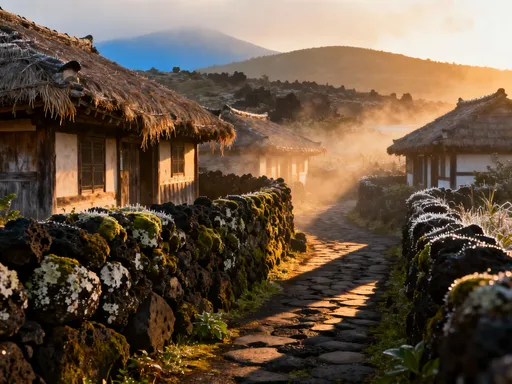
Jeju’s built environment is unlike any other in Korea, shaped by centuries of isolation, volcanic activity, and a deep respect for natural harmony. The island’s architecture doesn’t impose itself on the landscape—it listens to it. This sensitivity is most evident in the use of local materials, especially volcanic basalt, which appears in everything from boundary walls to temple foundations. Known as *doldam*, these hand-stacked stone walls are more than functional; they are cultural symbols, built without mortar yet standing firm against coastal winds for generations. Their irregular textures and earthy tones create a visual rhythm that photographers find irresistible, especially when sunlight grazes their surfaces at low angles.
The island’s architectural identity is also rooted in adaptation. With frequent typhoons and salty sea breezes, structures are designed to endure. Roofs are low-slung, often curved to deflect wind, and homes are positioned to take advantage of natural shelter. Traditional Jeju houses, or *choga*, feature thatched roofs made from *sukjib*, a type of wild grass, and wooden frames reinforced with stone. These homes were once common across the island, but today, preserved examples can be found in cultural villages and heritage sites. Their weathered surfaces tell stories of time, resilience, and quiet domestic life—perfect subjects for documentary-style photography.
What elevates Jeju’s architecture for visual storytelling is its seamless integration with the environment. Unlike urban developments that dominate their surroundings, Jeju’s buildings often appear to grow from the land. A café perched on a cliff mimics the shape of a wave; a museum nestles into a hillside like a hidden cave. This dialogue between structure and setting creates layers of meaning in every frame. Photographers benefit from this balance, finding compositions where nature and human creation coexist in quiet dialogue. Whether shooting wide landscapes or intimate details, the island rewards those who observe with patience and intention.
Hallasan’s Footprint: Buildings Inspired by the Volcano
Mount Hallasan, the dormant volcano at Jeju’s center, is more than a geological landmark—it is a spiritual and aesthetic touchstone for the island’s architecture. Many modern buildings draw direct inspiration from its form, using sloping roofs, circular layouts, and dark stone to echo the mountain’s presence. One striking example is the Jeju Volcanic Rock Museum, where the exterior mimics cooled lava flows with undulating concrete walls and basalt accents. The building appears rooted in the earth, almost as if it emerged from the same forces that shaped the island. For photographers, such structures offer dramatic silhouettes, especially at sunrise when the sky softens behind their angular profiles.
Observatories and cultural centers around Hallasan’s base often adopt a similar design language. The Jeju Olle Foundation’s trail centers, for instance, use wide eaves and stone foundations to blend into the hills. Their interiors are designed to frame views of the mountain, creating natural picture windows that double as photographic opportunities. When shooting these spaces, timing is essential. Early morning light reduces harsh contrasts, allowing both interior details and exterior vistas to be captured clearly. A polarizing filter helps manage glare on glass surfaces, while a tripod ensures sharpness in low-light conditions.
For those interested in architectural abstraction, Hallasan-inspired buildings offer rich textures and tonal variation. Basalt stone, with its fine pockmarks and deep gray hues, contrasts beautifully with wooden elements and green moss that often grows between cracks. Wide-angle lenses emphasize the scale and curvature of these structures, while macro settings reveal the intricate details of weathered surfaces. Shooting from a low angle can enhance the sense of mass and permanence, making the buildings appear as natural extensions of the terrain. The key is to approach each site not just as a subject, but as part of a larger geological narrative.
Traditional Villages with a Photographic Soul
Among Jeju’s most evocative architectural experiences is Seongeup Folk Village, a preserved settlement that offers a window into pre-modern island life. Nestled on the eastern slopes of Hallasan, the village consists of over 100 traditional homes, many still standing in their original form. Thatched roofs, stone walls, and compact courtyards define the layout, creating a maze of intimate spaces that invite slow exploration. For photographers, this is a treasure trove of texture, shadow, and quiet moments. The thatch, aged to a soft silver-brown, catches light differently at various times of day, while the volcanic stone walls absorb and reflect warmth in subtle ways.
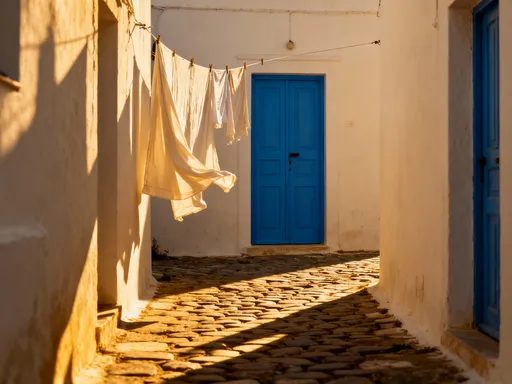
One of the most powerful aspects of Seongeup is its sense of continuity. Though it functions as a cultural site, some families still live within the village, maintaining traditional practices. Smoke curls from chimneyless hearths, chickens wander between homes, and laundry flaps gently in the breeze. These small, everyday details add life to architectural photography, transforming static buildings into living scenes. Capturing these moments requires discretion and respect—using longer lenses to maintain distance, avoiding intrusive angles, and never photographing people without permission. The goal is not to stage, but to observe.
Morning is the ideal time to visit. Mist often drifts between the houses, softening edges and creating a dreamlike atmosphere. Backlighting enhances the translucency of thatch, while side lighting emphasizes the depth of stonework. A tripod is useful for long exposures in dimly lit interiors, where wooden beams and earthen floors tell stories of generations past. For wider compositions, a 35mm or 50mm lens captures the rhythm of the village without distorting perspective. Seongeup is not just a place to take pictures—it is a place to feel history, to slow down, and to let the camera absorb the quiet dignity of a vanishing way of life.
Modern Art Spaces Disguised as Architecture
Jeju’s architectural evolution reaches its peak in its contemporary art spaces, where function, form, and nature converge in unexpected ways. One of the most celebrated is the Leeum Art Museum, though not located on Jeju, its design philosophy has deeply influenced the island’s newer cultural buildings. On Jeju itself, the Museum of Modern Art, Jeju (MOCA Jeju) exemplifies this trend. Built into a hillside in the suburbs of Jeju City, its pavilions emerge like sculptural forms from the earth. Concrete curves, glass walls, and open courtyards create a dialogue between interior and exterior, inviting visitors—and photographers—to experience art as part of the landscape.
These spaces are designed with light in mind. Skylights, reflective pools, and strategically placed windows manipulate natural illumination to enhance both artworks and architectural details. For photographers, this means endless opportunities for creative compositions. Reflections in water features double the visual impact of a structure, while shadows cast by overhangs create dynamic patterns on walls and floors. The golden hour is particularly effective here, when warm light slides across concrete surfaces, highlighting texture and depth. A circular polarizer can reduce glare on glass, allowing interiors to be visible without losing the sky’s color in the frame.
Unlike traditional museums, these modern spaces encourage interaction between viewer and environment. Staircases spiral like shells, walkways hover above gardens, and viewing platforms offer panoramic vistas. These elements add movement and perspective to photographs. A wide-angle lens captures the sweep of a curved wall against the sky, while a telephoto lens isolates geometric patterns or the silhouette of a visitor against a glass facade. The key is to balance architectural precision with human scale, showing how people inhabit and experience these spaces. In doing so, the photographer moves beyond documentation into storytelling.
Coastal Structures That Defy the Elements
The northern coast of Jeju, battered by strong winds and powerful waves, is home to some of the island’s most resilient and photogenic structures. Lighthouses, seaside cafes, and observation decks are engineered to withstand extreme conditions, resulting in bold, minimalist designs that stand in stark contrast to the wild ocean. The Udo Island Lighthouse, for example, is a compact, whitewashed tower that rises from a rocky outcrop, its simplicity emphasizing its isolation. Against the deep blue of the sea and the gray churn of waves, it becomes a powerful focal point in any composition.
Architects working in these environments prioritize function without sacrificing beauty. Walls are thick, windows small and reinforced, and foundations anchored deep into volcanic rock. Yet, many of these buildings also feature large glass panels oriented toward the horizon, creating a visual connection between interior and ocean. Seaside cafes like those in Gimnyeong or Seongsan often use shipping containers or prefabricated modules, painted in soft whites or grays to blend with the mist. Their industrial origins are softened by wooden decks, potted plants, and curved roofs that echo the swell of the sea.
For photographers, the northern coast offers dramatic conditions that demand preparation. Wind can make handheld shooting difficult, so a sturdy tripod and a lens with image stabilization are essential. Fast shutter speeds freeze waves mid-crash, while slow exposures turn foam into ethereal mist. Drone photography is especially effective here, revealing the full relationship between structure and sea. Aerial shots show how buildings cling to cliffs, how pathways follow the contours of erosion, and how human presence is both assertive and fragile against nature’s force. Always check local regulations before flying, and avoid disturbing wildlife or private property.
Offbeat Installations You Can’t Miss
Scattered across Jeju are small-scale architectural wonders that delight the eye and spark the imagination. These quirky installations—turtle-shaped bus stops, glass dome chapels, and sculptural rest areas—are not just functional; they are expressions of local creativity and humor. In the village of Hallim, a series of bus shelters are designed to resemble sea turtles, their domed backs made of translucent resin that glows in sunlight. These whimsical forms invite playful compositions, especially when framed against green fields or blue skies.
Another beloved example is the Glass House Chapel in Seogwipo, a small wedding venue shaped like a teardrop and made entirely of transparent panels. Nestled in a garden of hydrangeas, it reflects the sky and surrounding foliage, changing color with the weather. Photographers can use wide apertures to blur the background and make the structure appear to float, or shoot through the glass to capture distorted reflections of visitors inside. Early morning visits ensure soft light and fewer crowds, allowing for more intimate shots.
These installations thrive on candid moments. A child peering out from a turtle window, a couple holding hands inside the glass chapel, or a cyclist pausing at a sculptural rest stop—these are the scenes that bring the architecture to life. Timing is crucial; weekends and holidays draw more visitors, so weekday mornings offer the best chance for unobstructed views. A 50mm prime lens works well for these close-range shots, balancing clarity with natural perspective. While they may seem minor compared to grand museums or ancient villages, these small structures embody Jeju’s spirit: inventive, welcoming, and deeply connected to its environment.
How to Photograph Jeju’s Architecture Like a Pro
To truly capture Jeju’s architectural beauty, preparation is key. The best seasons for photography are spring (April to June) and autumn (September to November), when temperatures are mild, skies are clear, and light is soft. Summer brings humidity and frequent afternoon showers, while winter can be windy and overcast—though these conditions can also yield moody, atmospheric images. Always check the weather forecast and plan shoots around sunrise and sunset, when the quality of light enhances texture and depth.
Essential gear includes a DSLR or mirrorless camera with at least two lenses: a wide-angle (16-35mm) for capturing full structures and landscapes, and a prime lens (50mm f/1.8) for details and portraits. A tripod is invaluable for low-light shots, long exposures, and architectural precision. A circular polarizer reduces reflections on glass and water, while a neutral density filter allows for slower shutter speeds during daylight. Don’t forget extra batteries and memory cards—remote locations may lack charging facilities.
Respect is as important as technique. Many traditional homes and cultural sites are private or sacred. Always look for signage indicating photography rules, and when in doubt, ask for permission. Avoid using flash inside homes or temples, and never touch or climb on structures. In villages like Seongeup, be mindful of residents’ privacy. The most powerful images often come from patience and observation, not intrusion.
Finally, remember that architecture photography is not just about capturing buildings—it’s about conveying emotion. Each structure on Jeju carries history, intention, and a relationship with its surroundings. Let your compositions reflect that. Use leading lines to guide the eye, frame shots with natural elements like trees or archways, and include human figures to show scale and life. Whether you’re shooting a centuries-old stone wall or a futuristic glass dome, aim to tell a story. In doing so, you don’t just record Jeju—you connect with it.
Jeju’s architecture isn’t just built—it’s imagined, rooted in nature and culture. Each structure, old or bold, invites the camera to pause and reflect. Through photography, we don’t just document places—we connect with their soul. Pick up your lens, wander with curiosity, and let Jeju tell its story through your eyes.