You Won’t Believe What I Found Hiking Near Invercargill
Hiking in Invercargill, New Zealand, isn’t just about mountain views or forest trails—it’s where nature meets the unexpected. I stumbled upon structures so unique, so oddly placed, they stopped me mid-stride. Think rustic charm fused with bold design, hidden in plain sight along quiet paths. This is more than a walk; it’s a journey through art, history, and landscape intertwined. If you love off-the-beaten-path adventures, this place will blow your mind. What began as a casual day hike transformed into a discovery of how thoughtful design can elevate even the most modest trail into something unforgettable. Invercargill, often passed through without pause, reveals its soul not in grand vistas, but in quiet details.
Why Invercargill Deserves More Than a Pit Stop
Invercargill is frequently dismissed as a mere transit point for travelers en route to Stewart Island or the dramatic Fiordland National Park. Yet, those who linger discover a city of understated character, nestled at the southernmost edge of New Zealand’s South Island. With a population just over 50,000, it carries a calm that larger tourist hubs often lack. Its location—just 15 kilometers from the southern coastline—grants it access to diverse terrain: river flats, coastal dunes, rolling farmland, and pockets of native podocarp forest. These landscapes form the foundation of a surprisingly rich network of walking and hiking trails, many maintained by the local council and community groups.
What makes Invercargill special for hikers is not the difficulty of its trails, but the accessibility and variety they offer. Whether you’re an experienced trekker needing a low-key day or a casual walker looking for fresh air and bird song, the region accommodates. The Oreti River, stretching over 80 kilometers from the Takitimu Mountains to the Tasman Sea, provides a natural spine for several walking routes. Along its banks, you’ll find native ferns, pūkeko wading in wetlands, and the occasional glimpse of a kotare, or sacred kingfisher, darting through the trees. These are not wilderness treks, but gentle immersions in the rhythms of rural Southland.
Yet, the true appeal lies in how the city has embraced its natural surroundings through intentional design. Unlike many small towns that treat parks as afterthoughts, Invercargill has invested in creating trail experiences that blend recreation with cultural and aesthetic value. The result is a network of paths where every turn offers not just a view, but a moment of reflection. For families, couples, or solo walkers, these trails provide safe, well-marked routes that encourage exploration without risk. And because the area sees fewer tourists, there’s a sense of authenticity—you’re not following a curated itinerary, but discovering something real.
Moreover, Invercargill’s climate, though often windy and cool, contributes to the clarity of the air and the vividness of the greenery. Rainfall is moderate, and the open skies allow for long daylight hours in summer, making early morning or late afternoon hikes particularly rewarding. The city’s flat topography means most trails are gentle on the joints, ideal for older adults or those managing physical limitations. For women in their 30s to 50s who value both wellness and meaningful experiences, these walks offer a rare combination: light exercise, mental reset, and cultural connection—all without the stress of crowds or complicated logistics.
The Hidden Trail That Started It All: A Closer Look at the Rotary Park Walkway
The Rotary Park Walkway is where my journey into Invercargill’s architectural surprises began. At first glance, it appears to be a standard urban greenway—gravel paths winding beside the Waihopai River, bordered by flaxes and manuka bushes. But as I walked deeper into the park, I noticed subtle details that transformed the experience. A bridge made entirely of recycled timber, its handrails carved with wave patterns, arched over a quiet stretch of water. Nearby, a seating area fashioned from old railway sleepers and driftwood invited rest with both comfort and character.
What sets this trail apart is the integration of public art into functional infrastructure. The centerpiece is a mosaic-covered pavilion, created through a community project led by local artists and schoolchildren. The tiles depict native birds, Māori koru patterns, and scenes from early settler life. It’s not a museum exhibit tucked away behind glass—it’s a living space, used for small gatherings, outdoor classes, and even quiet meditation. The structure shelters visitors from sudden showers, yes, but it also shelters a sense of belonging. It says, “You are welcome here.”
These design choices are not accidental. They reflect a philosophy that recreation spaces should do more than serve utility—they should inspire. The wooden bridges, for instance, are engineered to withstand seasonal flooding while minimizing environmental impact. Their arched design mimics the natural curve of the river, creating harmony between human construction and natural flow. Similarly, the seating areas use repurposed materials not just for sustainability, but to tell a story of renewal. Old materials given new purpose echo the park’s own transformation from neglected riverside to cherished community asset.
For hikers, especially those seeking more than physical exertion, this attention to detail deepens the experience. You’re not just moving through space—you’re engaging with place. The sounds of tūī birds overhead, the cool shade of mature trees, and the tactile quality of handcrafted wood under your fingers all contribute to a multisensory journey. And because the trail is well-lit and frequently patrolled, it feels safe and welcoming, particularly for solo female walkers. This blend of safety, beauty, and meaning makes Rotary Park a quiet masterpiece of thoughtful urban planning.
From Forest to Fabrication: Encountering Unique Structures on the Chasland’s Mistake Track
Just a 20-minute drive east of Invercargill lies the Chasland’s Mistake Track, a lesser-known trail that climbs into the foothills of the Hokonui Range. The name itself—reportedly a colonial-era error in land surveying—hints at the area’s understated charm. The path begins in regenerating native bush, with rātā and kānuka trees forming a canopy that filters sunlight into soft green pools. After about 40 minutes of steady ascent, the forest opens to sweeping views of the Awarua Plain and the distant Tasman Sea.
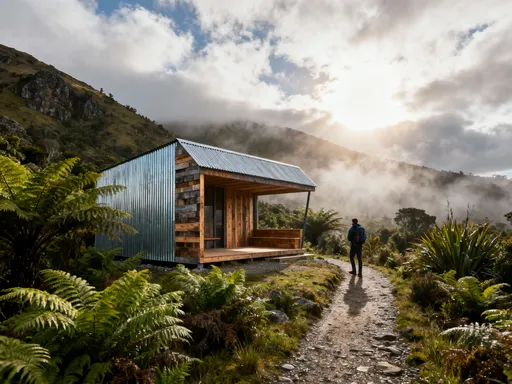
But what truly distinguishes this hike is the presence of three shelter huts, each uniquely designed and thoughtfully placed. Unlike the standard Department of Conservation (DOC) shelters found elsewhere in New Zealand—functional but often plain—these structures reflect a bold departure in design philosophy. Built using corrugated iron, recycled timber, and large glass panels, they serve as both refuge and artwork. One hut, perched on a ridge, features a curved roof that mimics the shape of the surrounding hills, while another includes a viewing platform with laser-cut metal railings depicting local plant species.
These huts were part of a regional initiative to reimagine trail infrastructure as an extension of cultural identity. Designed by Southland-based architects in collaboration with local iwi, they respond to the region’s harsh weather—strong southerly winds, sudden rain, and cool temperatures—while offering warmth and visual interest. The use of corrugated iron, a material common in rural New Zealand farm buildings, grounds the structures in local tradition. Yet the modern finishes—sleek lines, strategic glazing, and sustainable insulation—elevate them into contemporary expressions of place.
Hikers who reach these shelters often linger longer than necessary, drawn not just by protection from the elements but by the sense of arrival. Sitting inside, sipping tea from a thermos, you feel both sheltered and connected—to the landscape, to the builders, to the quiet effort behind such craftsmanship. For women who appreciate both practicality and beauty, these spaces resonate deeply. They are proof that functionality need not come at the cost of artistry, and that even small structures can carry emotional weight.
The Architecture of Isolation: How Remote Locations Inspire Bold Design
In remote regions like Southland, distance from major cities often means limited access to materials, labor, and funding. Yet, rather than leading to neglect, this isolation has sparked innovation. Invercargill and its surrounding districts have become laboratories for low-cost, high-impact design solutions that prioritize resilience and resourcefulness. Take, for example, the use of repurposed shipping containers as trailhead information centers. Stacked and modified with windows, insulation, and solar panels, these modular units provide durable, weather-resistant spaces for maps, brochures, and emergency contact details.
Another example is the geometric windbreaks found along coastal sections of the Oreti Beach Walk. Designed using triangulated steel frames, these structures deflect strong gusts while creating sheltered seating areas. Their angular forms, inspired by both Māori weaving patterns and modernist architecture, serve a dual purpose: protection and visual intrigue. At sunset, the shadows they cast form intricate patterns on the sand, turning a functional element into a temporary art installation.
Solar-powered lighting is another hallmark of the region’s trail design. Along key pathways, especially those used by commuters and evening walkers, discreet LED lights are embedded in posts or the ground. These are not bright or intrusive, but just enough to ensure safety without disrupting the night sky. Powered entirely by renewable energy, they reflect a commitment to sustainability that aligns with New Zealand’s broader environmental goals.
Through interviews with local planners and architects, a common theme emerges: design in Southland is not about spectacle, but about solving real problems with dignity. As one council engineer explained, “We don’t have the budget for flashy projects, so we have to be smart. Every dollar must serve multiple purposes.” This mindset has led to buildings and installations that are modest in scale but rich in intention. They are not designed to impress tourists, but to serve residents—especially families, seniors, and community groups—who rely on these spaces for health, connection, and joy.
Hiking with a Purpose: Connecting Culture and Landscape Through Design
In New Zealand, the relationship between people and land is deeply rooted in Māori worldview, where nature is not separate from culture, but inseparable. In Invercargill, this philosophy is visibly embedded in trail design. Along the Oreti River walk and other suburban paths, carved pou (posts) mark significant points, their intricate patterns telling stories of Ngāi Tahu ancestors, migratory waka (canoes), and the arrival of early European settlers. These are not decorative add-ons, but integral parts of the landscape, placed with ceremonial care.
Bilingual signage—written in both English and te reo Māori—is another consistent feature. It does more than inform; it affirms the presence and value of indigenous language. Names like “Waihopai” (meaning “waters of hope”) and “Awarua” (“two waters”) carry meaning that enriches the hiker’s understanding of place. Even simple fence designs incorporate woven harakeke (flax) patterns, echoing traditional Māori craftsmanship. These details create a sense of continuity, linking past and present in a way that feels natural, not forced.
For visitors, especially women who value meaningful travel, these elements transform a walk into a cultural encounter. You’re not just passing through; you’re being welcomed into a story. One mother I spoke with, walking with her two daughters, said, “I want them to grow up knowing this land has a voice, and that it speaks in more than one language.” That sentiment captures the deeper purpose of these designs: they educate, honor, and connect.
Moreover, the inclusion of cultural elements in public spaces fosters pride among local residents. Community-led art projects, such as the mosaic in Rotary Park or the carved pou along the river, involve schools, elders, and volunteers. This participatory approach ensures that trails are not imposed from above, but grown from within. The result is a network of paths that feel owned by the people, not managed for them. For women who care about community well-being and intergenerational connection, this model offers quiet inspiration.
Practical Tips for Exploring Invercargill’s Architectural Trails
To make the most of your hike, preparation is key. Footwear should be sturdy and waterproof, as many trails—especially after rain—can become muddy or slippery. Gumboots or hiking boots with good tread are ideal. Dress in layers, as Southland weather is unpredictable; a windproof jacket is essential, even in summer. While most trails are well-marked, carrying a physical map or downloading the Invercargill Trails Map app ensures you won’t lose your way, especially in areas with limited phone signal.
The best times to hike are mid-morning to mid-afternoon, when winds tend to be lighter and visibility is highest. Avoid early morning coastal walks during southerly storms, as gusts can be strong enough to knock you off balance. Always check the MetService forecast before heading out. Most trails are suitable year-round, but spring and autumn offer the most pleasant conditions—fewer bugs, milder temperatures, and vibrant foliage.
Respect for the environment and community is paramount. Practice Leave No Trace principles: carry out all rubbish, stay on marked paths to protect native vegetation, and avoid touching or climbing on cultural installations. These structures are not just art—they are expressions of identity and care. Do not leave graffiti, remove materials, or alter any part of the installations. If you see damage, report it to the Invercargill City Council or DOC office.
For families, the Rotary Park Walkway and Oreti River Trail are excellent starting points—flat, safe, and rich in features. For more experienced hikers, the Chasland’s Mistake Track offers a rewarding challenge. All trails are dog-friendly, provided pets are on a leash. Public parking, restrooms, and picnic areas are available at major trailheads. And because the region is less crowded than other parts of New Zealand, you’re likely to enjoy moments of peaceful solitude—something increasingly rare in today’s world.
Beyond the Trail: Why These Small Designs Matter on a Big Scale
Standing at the top of the Chasland’s Mistake Track, looking out over the vast plain, I realized that the huts, bridges, and carvings I’d encountered were more than just objects. They were acts of care. In a world that often equates value with size and spectacle, Invercargill’s trails remind us that meaning can be found in the modest, the handmade, the locally rooted. These structures do not shout for attention—they whisper, inviting you to look closer, to stay longer, to listen.
What makes them powerful is their authenticity. They were not designed by distant consultants, but by people who live here, who understand the wind, the rain, the light. They reflect a belief that beauty and function are not opposites, but partners. And in doing so, they redefine what it means to belong to a place. For women who seek balance—between activity and reflection, between nature and culture, between solitude and connection—these trails offer a quiet model of well-being.
On a broader scale, Invercargill’s approach challenges the notion that only famous destinations deserve investment. It proves that thoughtful design, even in overlooked corners, can transform ordinary spaces into sources of pride and joy. As cities worldwide grapple with urban decay, climate change, and social fragmentation, the lessons from Southland are timely: small interventions, rooted in community and place, can have outsized impact.
So the next time you plan a walk, don’t just ask where you’re going—ask what you might discover. Adventure isn’t always found in distant peaks or foreign lands. Sometimes, it’s in a wooden bridge over a quiet river, in a mosaic made by children’s hands, in a hut that shelters more than just the body. Invercargill taught me that the most memorable journeys are not measured in kilometers, but in moments of wonder. And those, it turns out, are hiding in plain sight.