You Won’t Believe What I Ate in Toledo
Toledo, Spain, isn’t just a feast for the eyes with its medieval streets and hilltop views—it’s a hidden food paradise waiting to be discovered. I went expecting history, but left obsessed with flavors I never saw coming. From ancient recipes still served in family-run taverns to modern twists on Castilian classics, the city’s dining scene is anything but predictable. This is more than a meal—it’s a journey through time on a plate. The scent of saffron and roasted garlic lingers in the air, mingling with the sound of church bells echoing through stone alleys. Here, food is not an afterthought to sightseeing; it is the very heartbeat of the experience, a living thread connecting past and present through taste.
Stepping into a Living Postcard
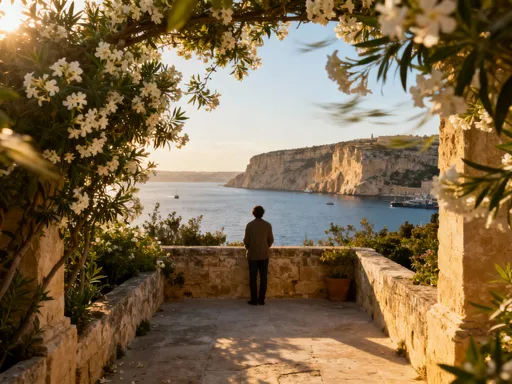
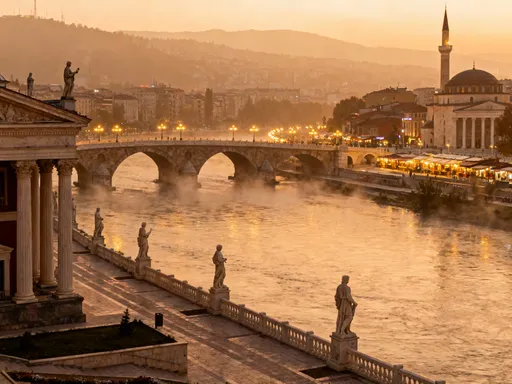
Toledo rises from the curve of the Tagus River like a vision plucked from a medieval manuscript. Perched atop a rocky hill, encircled by ancient stone walls and crowned with a cathedral of staggering grandeur, the city feels suspended between centuries. As you cross the Alcántara Bridge, the first glimpse of Toledo’s skyline—towers, domes, and tiled rooftops climbing toward the sky—elicits a quiet awe. This is a UNESCO World Heritage site not because of nostalgia, but because the city has preserved its soul. Every cobblestone street, every arched gateway, every wrought-iron balcony tells a story of resilience, artistry, and layered history.
The emotional impact of arriving in Toledo is subtle but profound. There is no rush of traffic, no towering hotels to break the skyline. Instead, the city unfolds gradually, revealing itself in quiet courtyards, hidden chapels, and sudden panoramic views over the river valley. The narrow alleys twist and turn like a labyrinth, encouraging slow exploration. This deliberate pace is not just for sightseeing—it sets the rhythm for the entire visit, especially when it comes to food. In Toledo, meals are not interruptions to your itinerary; they are integral moments of connection. Dining here feels like stepping into a painting, where every sense is heightened, and every bite is part of the landscape.
The preserved architecture does more than please the eye—it creates an immersive environment where culture and cuisine intertwine. Because the city has resisted modernization in its historic core, the restaurants, bakeries, and markets retain authenticity. You won’t find generic chain eateries or mass-produced souvenirs on every corner. Instead, family-run establishments have occupied the same storefronts for generations, passing down recipes alongside property deeds. This continuity allows visitors to experience not just what people eat in Toledo, but why they eat it, and how it fits into the larger story of the city. The architecture doesn’t just frame the view—it frames the meal.
Why Food Tells Toledo’s True Story
To understand Toledo’s cuisine is to understand its history—a complex tapestry woven from Christian, Muslim, and Jewish traditions. For centuries, these communities lived side by side within the city’s walls, each contributing to a shared cultural fabric. This coexistence, known as convivencia, was not always peaceful, but it was deeply influential, especially in the kitchen. The flavors of Toledo are a direct result of this fusion, where Moorish spices meet Castilian meats, and Sephardic baking techniques shape local sweets.
Today, this heritage lives on in dishes that might seem simple at first glance but carry centuries of adaptation and survival. Take, for example, the use of almonds, honey, and cinnamon—ingredients introduced by Arab settlers that now define many regional desserts. Or consider the slow-cooked stews, a practical solution for feeding families through cold winters, enriched with garlic and paprika, both staples brought through Mediterranean trade routes. Even the breads reflect this blend: crusty on the outside, soft within, often baked in wood-fired ovens that have stood for generations.
Unlike many tourist destinations where local cuisine is watered down for foreign palates, Toledo resists such compromise. Menus in family-run mesones still feature dishes that have changed little since the 15th century. This authenticity is not performative—it is lived. When a grandmother serves you a dish she learned from her mother, there is no need for explanation. The food speaks for itself. It carries memory, identity, and pride. For travelers, this means every meal becomes a form of historical engagement, a way to taste the past without reading a single textbook.
The resilience of these culinary traditions also speaks to a deeper cultural value: the importance of continuity. In a world that often prioritizes novelty, Toledo honors the old. Recipes are not updated for trends; they are preserved with reverence. This is not to say innovation is absent—modern chefs in the city do experiment, but they do so with respect, building on tradition rather than replacing it. To eat in Toledo is to participate in a dialogue between eras, where each bite acknowledges those who came before.
The Local Lunch That Changed Everything
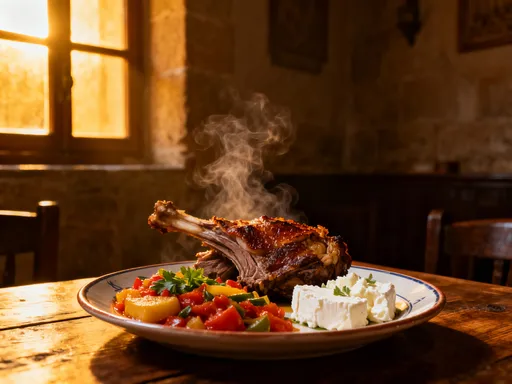
It began in an unassuming corner of the Jewish Quarter, in a small mesón with a faded awning and a chalkboard menu written in hurried script. There were no pictures, no English translations, no digital displays. Just the scent of onions caramelizing in olive oil and the murmur of locals greeting the owner by name. I took a seat at a wobbly wooden table, unsure of what to order, and simply pointed at what the couple beside me was eating. Moments later, a steaming plate arrived: pisto manchego, a rustic vegetable stew of tomatoes, zucchini, and bell peppers, topped with a slice of fresh goat cheese that melted slowly into the warmth below.
The first bite was a revelation. The vegetables had been cooked slowly, allowing their flavors to meld into a rich, almost jam-like consistency. The acidity of the tomatoes balanced the sweetness of the peppers, while the cheese added a creamy tang that elevated the entire dish. It was humble, yes, but also deeply satisfying—like something a grandmother would make on a Sunday afternoon. What struck me most was not just the taste, but the care behind it. This was not food prepared for volume or speed. It was food made with patience, with memory, with intention.
The owner, a woman in her sixties with flour-dusted hands, stopped by to check if everything was to my liking. When I praised the pisto, her face lit up. She explained that the recipe had been in her family for over a century, passed down from her great-grandmother, who used vegetables from her own garden. She still shops at the municipal market every morning, selecting only what is in season. There is no frozen produce, no canned tomatoes—only what is fresh and local. That level of commitment, so quietly expressed, made the meal feel sacred.
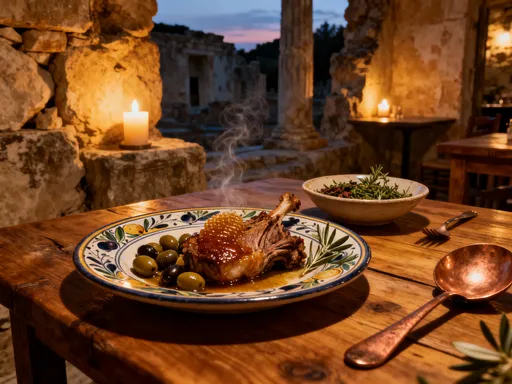
Later, I was served a second course: slow-roasted lamb with rosemary and garlic, cooked in a clay pot until the meat fell away from the bone. Paired with a glass of deep red wine from La Mancha, it was the kind of meal that slows time. Conversations with fellow diners—though limited by language—flowed easily over shared smiles and nods. No one rushed. No one checked their phone. The rhythm of the meal matched the rhythm of the city: deliberate, unhurried, meaningful. That lunch did more than fill my stomach; it reshaped my understanding of what travel could be.
Sweet Secrets from Ancient Kitchens
No visit to Toledo is complete without tasting its most famous export: mazapán, or marzipan. This delicate confection, made from ground almonds, sugar, and egg white, has been crafted in the city since the 12th century. Legend has it that nuns in Toledo’s convents first developed the recipe during a famine, using almonds and sugar to create a nutritious, long-lasting food. Over time, it evolved into a beloved treat, especially during religious holidays like Christmas and Easter.
What sets Toledo’s mazapán apart is not just its history, but its quality. Unlike mass-produced versions found elsewhere, the marzipan here is made in small batches by artisan confectioners who guard their recipes closely. The almonds—often sourced from nearby regions like Alicante—are carefully selected for their sweetness and texture. The mixture is kneaded by hand, shaped into rounds, hearts, or fruits, and left to dry slowly. The result is a confection that is smooth, not gritty, with a subtle nuttiness that lingers on the palate.
Walking through Toledo’s old town, you’ll find numerous shops specializing in mazapán, each with its own variation. Some add a hint of lemon zest, others coat the pieces in dark chocolate, and a few even infuse them with saffron for a golden hue. The most traditional, however, remain plain—unadorned, yet perfect in their simplicity. Many of these shops have been family-run for generations, with wooden counters and glass display cases that seem untouched by time.
But marzipan is not the only sweet delight Toledo offers. Torta de aceite, a thin, crisp olive oil cake dusted with powdered sugar, is another local favorite. Its origins trace back to Islamic influence, where olive oil was a staple in both cooking and baking. Light and fragrant, it pairs beautifully with coffee or dessert wine. Another specialty is alajú, a layered cake made with honey, nuts, and sometimes a thin sheet of wafer, reflecting the city’s Moorish past. These desserts are not merely treats—they are edible artifacts, preserving centuries of cultural exchange in every bite.
Off-the-Beaten-Path Bites Only Locals Know
Beyond the main plazas and tourist routes, Toledo reveals its true culinary heart in the quiet corners where locals gather. These are not places you’ll find at the top of travel apps or guidebooks. They don’t need flashy signs or Instagrammable interiors. Instead, they thrive on reputation, word-of-mouth, and the daily rhythm of neighborhood life. To find them, you must learn to observe: follow the lunchtime crowd spilling out of the market, listen for the clatter of plates in a tucked-away patio, or watch where the elderly couple stops for a midday vermouth.
One such spot is a tiny bar near the Mercado de Abastos, where the counter is lined with small plates of tapas—anchovies marinated in vinegar and herbs, thin slices of cured ham, and croquetas filled with salt cod. There are no menus, only a daily selection written on a chalkboard in looping script. The owner, a man with a weathered apron and a quick smile, pours glasses of house wine without asking. You eat standing up, elbow to elbow with shopkeepers and retirees, and somehow, the food tastes better for it.
Another hidden gem is a family-run restaurant tucked into a courtyard off Calle Hombre de Palo. There’s no website, no reservations, and the only way to know it’s open is by the sound of laughter drifting into the street. Inside, long tables are set for communal dining, and the menu changes daily based on what’s fresh. I once found myself eating a stew of chickpeas and game meats, a dish so old its name has been lost to time, served with crusty bread for soaking up the juices. The family eats at the same table, their children darting between guests, offering extra bread or a taste of dessert.
Finding these places requires a shift in mindset. You must let go of the need for control, for translations, for guarantees. Instead, embrace curiosity. Point at what others are eating. Smile when offered a taste. Learn a few key phrases—“¿Qué recomienda?” (What do you recommend?) or “Para probar, por favor” (Something to try, please). These small acts of openness are often rewarded with warmth and generosity. And in these unscripted moments, you don’t just eat like a local—you feel like one.
Wine and Dine Like a Castilian
Toledo’s cuisine finds its perfect companion in the robust red wines of La Mancha, one of Spain’s largest and oldest wine regions. Just an hour’s drive from the city, the vast plains of La Mancha yield Tempranillo, Bobal, and Garnacha grapes, which produce wines of depth, structure, and warmth—ideal for pairing with the region’s hearty dishes. These are not wines meant for sipping in silence; they are made for sharing, for pouring generously, for accompanying long meals that stretch into the evening.
In a traditional Castilian bodega, wine is served in thick glasses, often from a communal carafe. The atmosphere is relaxed, the pace unhurried. You might start with a glass of young red alongside a plate of cheese and olives, then move to a crianza—a wine aged in oak—with your main course of roasted lamb or wild mushroom stew. The acidity cuts through the richness, while the tannins enhance the savory notes of the food. White wines, though less common, are also produced, particularly from the Airen grape, offering a crisp, floral contrast to lighter dishes.
One of the most memorable evenings I spent in Toledo was in a low-lit bodega near the cathedral, where the owner brought out a bottle from his personal reserve—a 2015 Tempranillo that had aged beautifully. He didn’t charge extra; he simply wanted to share something he loved. As we sipped, he told stories of harvest seasons, of family traditions, of how wine has always been a part of daily life in Castile. It wasn’t a performance; it was hospitality in its purest form.
The Castilian approach to dining is not about efficiency. It’s about presence. Meals unfold over hours, with multiple courses, pauses for conversation, and a willingness to linger. Dessert might be a small piece of mazapán with a glass of sweet wine, or a cup of strong coffee served with a tiny glass of aguardiente. The goal is not to finish, but to savor. And in that savoring, you begin to understand a deeper truth: that food, in Toledo, is not fuel. It is connection.
How to Eat Your Way Through Toledo (Without Missing a Thing)
To truly experience Toledo’s culinary culture, it helps to follow a rhythm that mirrors the lives of its residents. Begin your day in a quiet café near Plaza Zocodover, where the morning light filters through wrought-iron grilles and the air smells of freshly ground coffee and warm pastry. Order a café con leche and a medialuna—a flaky, buttery croissant—or, for something more local, a piece of torta de aceite. Eat slowly, watching the city wake up.
By midday, make your way to one of the family-run mesones for the main meal of the day. In Spain, lunch is not a quick break; it is the centerpiece of the dining experience, often lasting two hours or more. Look for places with daily specials listed on chalkboards—these are usually the freshest and most authentic. Consider starting with a cold appetizer like salmorejo (a thicker cousin to gazpacho) or a plate of local cheeses. Follow with a main course such as perdiz estofada (partridge stew) or cochinillo asado (roast suckling pig), both Castilian classics. Don’t skip the bread—it’s essential for mopping up sauces.
In the late afternoon, take a walk along the city walls to digest and enjoy the sunset over the Tagus River. Then, as evening falls, join the locals for a tapas crawl. Start with a vermouth or a glass of wine at a standing bar, then move from one small eatery to the next, sampling different bites at each stop. This is not about filling up, but about variety and discovery. Try mollejas (sweetbreads), or a small tortilla Española, or a skewer of grilled morcilla (blood sausage). Let the night unfold naturally.
When planning your meals, keep a few practical tips in mind. Portion sizes in Toledo are generous, so sharing dishes is both economical and traditional. While reservations are not always necessary for lunch, they are recommended for dinner, especially on weekends. And be mindful of seasonal specialties: in autumn, look for game meats and mushroom dishes; in spring, enjoy fresh asparagus and lamb; in summer, cold soups and grilled vegetables dominate. Above all, resist the urge to over-schedule. The best meals in Toledo are often the unplanned ones—those discovered by chance, guided by smell, sound, and the kindness of strangers.
Toledo doesn’t just feed your stomach—it feeds your curiosity. Every dish holds a chapter of history, every alley leads to a new flavor, and every meal feels like a quiet revelation. This is travel at its most intimate: not checked off a list, but felt in your bones. Come for the castles, stay for the cuisine—and leave with stories worth sharing.