You Won’t Believe What I Ate in Kota Kinabalu
Kota Kinabalu isn’t just about sunsets over the South China Sea or hikes near Mount Kinabalu—its real magic happens on a plate. I went searching for Sabah’s soul, and found it in sizzling street food, fragrant night markets, and family-run stalls dishing out generations-old recipes. From bold flavors to unexpected textures, the city’s specialty foods tell stories of culture, land, and tradition. This is more than a food trip—it’s a taste of Borneo’s heart.
First Bite in the City: My Arrival and First Food Encounter
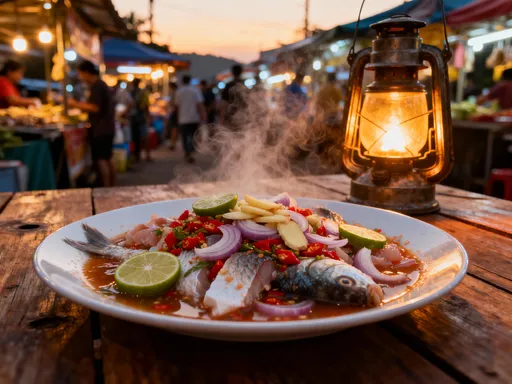
The moment I stepped out of the terminal at Kota Kinabalu International Airport, the tropical warmth wrapped around me like a familiar embrace. The air was thick with humidity and the distant sizzle of grills—smoky, savory, and faintly sweet. It wasn’t long before I followed my nose to a bustling open-air market just a short drive from the city center. There, under the glow of string lights and banana-leaf awnings, I had my first real taste of Sabah: hinava, a traditional Kadazan-Dusun dish of raw marinated fish.
The vendor, a woman with kind eyes and quick hands, prepared it fresh at her stall. She used firm, translucent slices of mackerel, marinated in calamansi lime juice, ginger, onions, and bird’s eye chilies. The citrus ‘cooked’ the fish in a manner similar to ceviche, while the chilies delivered a gentle warmth rather than overwhelming heat. What struck me most wasn’t just the freshness—it was the story behind it. Hinava is more than a dish; it’s a reflection of coastal life in Sabah, where fishing has sustained communities for generations. Families still rely on daily catches from the South China Sea, and the preparation honors the integrity of the ingredient, preserving tradition without unnecessary embellishment.
Eating hinava that first night felt like an initiation. It was bold, clean, and deeply connected to place. The lime cut through the richness of the fish, the ginger added depth, and the crunch of red onion grounded the experience. It wasn’t just food—it was a conversation with the land and sea, a reminder that in Kota Kinabalu, meals are not merely consumed; they are experienced, remembered, and passed down.
Sabah’s Signature Flavors: What Makes the Cuisine Unique
To understand the food of Kota Kinabalu is to understand its people—a blend of Malay, Chinese, and indigenous Kadazan-Dusun cultures, each contributing distinct flavors and techniques to the region’s culinary identity. Unlike the coconut-heavy curries of Peninsular Malaysia, Sabah’s cuisine is lighter, brighter, and more varied, shaped by its geography and history. The coast provides an abundance of seafood, the rainforests yield rare herbs and fruits, and the highlands grow crisp vegetables and aromatic roots. This convergence creates a flavor profile that is both adventurous and deeply comforting.
One of the most distinctive ingredients I encountered was tuhau, a wild ginger native to Borneo. It has a sharp, peppery bite with citrus undertones, often served pickled alongside rice and grilled fish. Then there’s bambangan, a wild mango that grows in the forests around the city. Unlike its cultivated cousins, bambangan is not eaten raw; instead, it’s fermented and used in stews or sambals, lending a sour, umami-rich depth that no other fruit can replicate. These ingredients are not just local curiosities—they are cultural cornerstones, preserved through oral tradition and seasonal harvesting.
The use of chili is also unique here. While sambal is a staple across Malaysia, Sabah’s version often features locally grown chilies that offer a slower, more rounded heat. Combined with shrimp paste, lime, and sometimes pineapple, it becomes a condiment that elevates everything it touches. The balance of sour, spicy, and savory is not accidental—it’s the result of generations refining flavors to match the climate and terrain. In a place where humidity can dull the appetite, these bright, acidic notes keep the palate awake and engaged.
What makes Sabah’s cuisine truly special is its authenticity. There’s little pretense in how food is prepared or served. Meals are not plated for Instagram; they are meant to nourish, to bring people together, and to honor the land. Whether it’s a simple bowl of rice with grilled fish or a complex stew simmered for hours, every dish carries intention. And for the traveler willing to look beyond the surface, these flavors offer a direct line into the soul of the region.
Hidden Eateries with Big Personalities: Off-the-Beaten-Path Eats
While tourist-friendly restaurants serve reliable versions of local dishes, the true essence of Kota Kinabalu’s food culture lives in its unassuming corners. One morning, I followed a local recommendation to a modest kopitiam tucked between a hardware store and a tailor shop in the heart of the city. The linoleum floors were worn, the ceiling fans wobbled, and the menu was handwritten on a chalkboard. But the aroma of fried shallots and toasted sesame oil told me I was in the right place.
I ordered kolo mee, a dish of springy egg noodles tossed in a dark, savory sauce made from soy, lard, and char siu (barbecued pork). The noodles were firm, the sauce rich but not greasy, and the dish was topped with a scattering of fried shallots and a perfectly poached egg. Around me, elderly men sipped strong kopi (local coffee) and debated the day’s news, while families shared plates of steamed buns and fried dumplings. This wasn’t a performance for visitors—it was daily life, and I was honored to be a part of it, even briefly.
Later that afternoon, I ventured to a roadside stall on the outskirts of town, known only to locals for its sugla, a traditional Kadazan fish stew. The cook, a woman named Aunty Lina, prepared it in a large clay pot lined with banana leaves. She used fresh river fish, tamarind, turmeric, and a blend of wild herbs I couldn’t name, slow-cooking the stew over a wood fire. The result was deeply aromatic—earthy, tangy, and layered with warmth. She served it with a side of steamed rice and a small dish of sambal, and I ate every bite in silence, overwhelmed by its complexity.
What struck me most about these hidden spots was their lack of pretense. There were no menus in English, no air conditioning, and certainly no influencers snapping photos. Yet, the food was some of the most honest I’ve ever tasted. It wasn’t designed to impress—it was made to feed, to comfort, to connect. In a world where dining experiences are increasingly curated and commercialized, these places are a reminder that real flavor thrives in simplicity, tradition, and love.
Night Markets Alive with Flavor: The Pulse of KK’s Food Scene
If the soul of Kota Kinabalu’s cuisine lives in hidden stalls, its heartbeat pulses strongest in the night markets. The most famous of these is the Gaya Street Sunday Market, which transforms the city’s main thoroughfare into a sprawling bazaar of sights, sounds, and smells. As dusk falls, rows of food carts ignite their grills, filling the air with plumes of smoke and the sizzle of skewers hitting hot metal. The scent of grilled meat, caramelizing sugar, and toasted spices drifts through the crowd, drawing families, couples, and solo eaters alike into its magnetic pull.
Walking through the market is an immersive experience. Vendors call out their specialties—“Grilled ambulong!” “Fresh oyster omelets!” “Ice kacang here!”—while children weave through the aisles with paper fans. Musicians play soft Bornean folk tunes in the background, and the occasional burst of laughter rises above the hum of conversation. It’s not just a place to eat; it’s a celebration of community, where food becomes the language of connection.
Among the must-try items is ambulong, sago worms roasted over charcoal and served on bamboo skewers. To the uninitiated, they may seem daunting, but their flavor is surprisingly mild—nutty, slightly smoky, and rich in protein. They’re a traditional snack in rural Sabah, often harvested from sago palms by hand. Equally memorable is the beehoon stir-fry, a tangle of thin rice noodles wok-tossed with plump prawns, Chinese sausage, and leafy greens. The dish is finished with a splash of dark soy and a sprinkle of crispy fried shallots, creating a harmony of textures and flavors.
Another standout is cincalok, a fermented shrimp paste mixed with lime, chilies, and onions. It’s pungent, briny, and deeply umami—a condiment that demands respect. I watched as locals dipped fresh vegetables and fried crackers into small bowls of it, savoring its boldness without hesitation. For first-time visitors, I recommend starting small and pairing it with rice or bread to temper the intensity.
For those planning a visit, timing is key. The Gaya Street Night Market runs every Sunday from late afternoon until around 10 p.m., with peak hours between 6 and 8. Arriving early ensures the best selection, while going later allows for a more relaxed pace. Hygiene is generally well-maintained, but it’s wise to choose stalls with high turnover and visible food preparation. Bottled water is advisable, and hand sanitizer is a small but useful companion. Above all, come with an open mind and an empty stomach—this is where Kota Kinabalu’s culinary spirit shines brightest.
From Farm to Table: Experiencing Local Ingredients Firsthand
To truly appreciate Kota Kinabalu’s cuisine, one must go beyond the plate and into the fields where its ingredients are born. I joined a half-day farm tour in Kundasang, a highland area about an hour’s drive from the city, known for its cool climate and fertile soil. The journey itself was breathtaking—winding roads flanked by terraced farms, mist curling around the peaks of Mount Kinabalu in the distance.
Our guide, a farmer named Mr. Hassan, led us through his plot, pointing out rows of leafy greens, cherry tomatoes, and, most importantly, tuhau plants. He explained how the wild ginger thrives in the rich, volcanic soil and is typically harvested by hand during the dry season. We picked a few stalks ourselves, their peppery scent rising as we snapped them from the root. Nearby, we saw baskets of freshly dug kesum (Vietnamese coriander) and daun pandan (screwpine leaves), both essential in local cooking for their aromatic qualities.
Back at a small farm kitchen, we participated in a hands-on cooking session. Using ingredients we had just picked, we prepared a simple but flavorful meal: a stir-fry of greens with garlic and shrimp, a clear broth infused with pandan and lemongrass, and a sambal made with fresh chilies and roasted shallots. The act of cooking with such fresh, vibrant ingredients was revelatory. There was no need for excessive seasoning—the flavors were already present, waiting to be coaxed out with care and respect.
This experience deepened my understanding of what ‘farm to table’ truly means. In Kota Kinabalu, it’s not a marketing slogan; it’s a way of life. Many families still grow their own vegetables, fish the rivers, and gather wild herbs from the forest. This connection to the land ensures that meals are not only delicious but sustainable. It also fosters a deep appreciation for seasonality and ingredient integrity—values that are increasingly rare in modern food systems. By stepping into the fields, I didn’t just learn about food; I learned about stewardship, tradition, and the quiet dignity of those who grow it.
Sweet Endings: Desserts and Drinks That Capture the Spirit
While Sabah’s savory dishes often steal the spotlight, its desserts and beverages offer a quieter, equally profound expression of culture. One of the first drinks I tried was pinasakan, a traditional Kadazan beverage made from fermented pineapple. Served chilled in a clay cup, it had a bright, tangy flavor with a faint effervescence—refreshing in the tropical heat. Unlike commercial fruit drinks, pinasakan is naturally fermented, giving it a subtle complexity that lingers on the palate. It’s often shared during festivals and family gatherings, symbolizing abundance and celebration.
Another favorite was sago gula melaka, a creamy dessert made from translucent sago pearls cooked in coconut milk and palm sugar syrup. The texture was smooth and slightly chewy, the flavor rich but not overly sweet. It’s a humble dish, often served in roadside stalls or at home, yet it carries deep cultural resonance. Sago, derived from the pith of the sago palm, has been a staple in Borneo for centuries, and this dessert is a celebration of that heritage.
I also visited a small family-run bakery in the city center that specialized in bahulu, delicate sponge cakes baked in intricately carved wooden molds. The cakes were light, airy, and faintly eggy, with floral or geometric patterns pressed into their tops. Watching the baker pour the batter into the molds and slide them into a traditional charcoal oven was like witnessing edible artistry. These cakes are often served during Hari Raya and other celebrations, symbolizing joy and togetherness.
What I came to appreciate most about Sabah’s sweets is their restraint. Unlike Western desserts that often rely on heavy creams and refined sugars, these treats are balanced, modest, and deeply rooted in local ingredients. They don’t shout for attention—they invite you in, gently, with warmth and sincerity. In a region where food is so often about sustenance and community, even dessert feels like an act of care.
Why Food Is the True Guide to Kota Kinabalu
By the end of my journey, I realized something profound: the best way to understand Kota Kinabalu is not through guidebooks or sightseeing tours, but through its food. Every meal I shared—whether at a bustling night market, a quiet kopitiam, or a highland farm—opened a door to conversation, to stories, to people. A vendor would tell me how her grandmother taught her to make kolo mee. A farmer would explain the seasonal rhythms of his harvest. A grandmother at a roadside stall would smile as I tried her sugla for the first time, nodding in approval when I asked for seconds.
Food in Kota Kinabalu is not just sustenance; it is edible heritage. Each dish carries the imprint of history, geography, and community. It reflects a way of life that values simplicity, seasonality, and connection. In a world where fast food and global chains homogenize taste, Sabah’s cuisine stands as a testament to resilience and authenticity. To eat here is to participate in a living tradition—one that welcomes newcomers with open arms and full plates.
So to any traveler considering a visit: come for the views of Mount Kinabalu at sunrise, stay for the turquoise waters of the South China Sea, but let yourself be moved by the flavors of the land. Let the tang of pinasakan, the heat of sambal, and the comfort of kolo mee guide you. Because in Kota Kinabalu, every bite tells a story—and every story leaves you fuller, not just in stomach, but in spirit.